


Eight Years, Two Bags, and So Many Golf Lessons Later....


Learning the Swing | Photos by Sheetal Vora
In Fall of 2018, I packed my life into two bags, twenty three kilos each, and boarded a flight from India to the U.S. I was leaving behind family, friends, familiar streets, and a professional life I had already started building as an architect. I came to pursue a Master's in Architecture, expecting to learn more about design. I did not expect the experience to teach me so much more.
The person who boarded that flight was focused on proving she could make it. Today, I think less about proving I belong and more about what I can contribute. Here are some of the lessons I picked up along the way.
From Meters to Feet and Finding My Voice
English was not my first, second, or even third language. It was my fourth. So walking into my first U.S. architecture studio came with its own learning curve. I remember converting meters to feet in my head while presenting design ideas and carefully choosing my words at the same time.
But the bigger adjustment was learning how to speak up. In the culture and work environments I grew up with in India, listening to someone more senior without interrupting, questioning, or openly disagreeing was taught as a sign of respect.
It took me years to recalibrate that instinct and become comfortable sharing ideas, asking questions, and disagreeing when I had a different perspective. I learned that in U.S. workplaces, speaking up was often seen as engagement, and disagreement could be part of a productive conversation rather than disrespect.
And yes, I eventually stopped doing the meter to feet conversion in my head. That was progress too. My phone still handles the Celsius to Fahrenheit math, no shame in outsourcing.
Architecture Has Different Rulebooks
The technical transition came with its own surprises. I went from the concrete and brick construction I knew in India to timber framing, steel structures, and curtain walls. I was also learning different building codes, standards, materials, documentation practices, and energy requirements.
But I was not starting from zero. The construction knowledge I brought from India still helped me understand how assemblies came together; I just had to learn how they were approached here. When something was unfamiliar, I asked questions, looked it up, and tried to understand the reasoning behind it.
I learnt that adapting does not mean starting over. It means building on what you already know, adding new tools to your toolbox, and learning which club to use for the shot in front of you.
Networking, Sports, and the Art of Small Talk
Networking in the U.S. was bit of a challenge at first. It was not just about introducing myself or talking about architecture. I had to learn how to make small talk, find common ground, and keep a conversation going while I was still learning the culture and its unwritten rules.
When I arrived, cricket was the only sport I knew. Over time, I learned enough about baseball, American football, and basketball to follow conversations and understand the references around me. I also watched well known American movies and noted unfamiliar idioms and phrases. These small efforts gave me more ways to enter conversations and find common ground, while still bringing my own experiences into the conversation.
And one thing I never expected to add to my professional toolbox: a golf swing! I started noticing how often golf came up in professional conversations and social gatherings. I now know what a driver, putter, and tee are. Aha! I may still be learning the game, but I have learned the bigger lesson: connection is not about having everything in common. It is about being curious enough to find a starting point.
You Have to Ask
The idea of having a mentor was new to me. I had to figure out where to find one, how to approach someone I admired, and, perhaps most importantly, how to ask for help. It turns out, you have to ask.
People are often willing to help, but building rapport takes time. If I meet someone whose work interests me at an event, I might look them up on LinkedIn during a quick break. Not stalking, just research, haha! Learning more about their work gives me a natural way to continue the conversation. I might then ask if they would be open to grabbing coffee and sharing their experience.
Those small conversations can grow into relationships, and those relationships can lead to mentors and sponsors. Now, when someone reaches out to me, I try to be as open and approachable as those who helped me.
Learn the Unwritten Rules
Every workplace has rules that are not written anywhere. One of the biggest lessons for me was learning how feedback was given.
Constructive criticism was new to me. The first time someone gave me feedback in the U.S., I took it as a harsh judgment rather than what it actually was: a way of pointing out what I could do better. Watching how my colleagues responded to feedback without getting defensive helped me learn how to receive it too. Over time, I stopped dreading feedback and started listening for what I could use from it.
I noticed something similar around boundaries. My old instinct was to take on more work when a senior asked, even when I was already stretched. Here, I learned that saying, "I cannot take this on right now," was not seen as unwillingness. Being upfront about what was already on my plate was respected as a professional answer.
It took time to get here, mostly by paying attention and staying curious.
From Finding My Voice to Making Room for Others
For the first several years, I was the one learning new words, new systems, new rooms, and new people to ask for help. Somewhere along the way, I became the person others were learning from.
I now manage a team, and one lesson from my early years continues to shape how I lead: make room for other voices. Sometimes, someone on my team has a good idea or sharp question but does not bring it up in front of the group. I started following up one on one, encouraging them to share it in our team chat. At times, I would also raise it myself during meetings, crediting them directly.
Seeing their contribution recognized made them less hesitant, and many eventually started speaking up on their own. What mattered most was creating an environment where people could learn from each other without second-guessing themselves.
Say Thank You. Seriously.
Another lesson was how much a small acknowledgment can matter. Early in my career in India, thank yous or specific words of encouragement were not something I saw modeled often. In U.S. workplaces, I noticed leaders taking the time to say thank you or good job, and I saw how much that small habit motivated people.
Now, as someone leading a team, I try to do the same. Sometimes that is just two words: thank you. It is a small thing. It still matters.
Take the Next Shot
Most of my growth came from small, practical lessons: asking questions sooner, learning from mistakes, paying attention to how people work, and being willing to try something unfamiliar.
Eight years in, my swing still isn't great. But I know enough now to guide someone else through their first few holes.
Learn. Adapt. Share. And take the next shot.
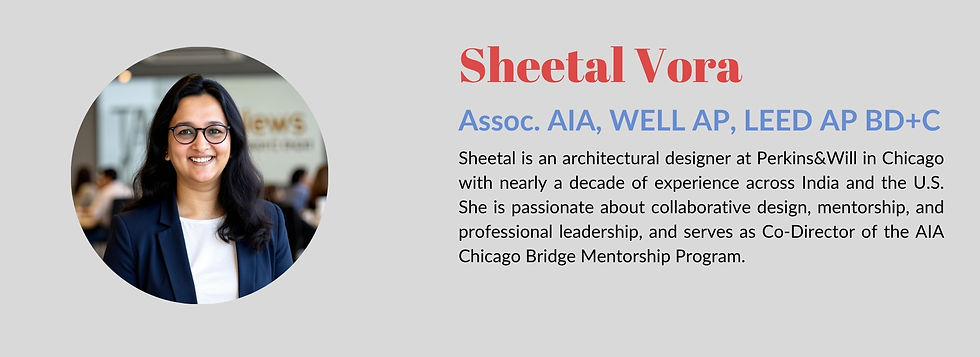
ABOUT THE AUTHOR


Comments