


Making “Otherness” Your Superpower
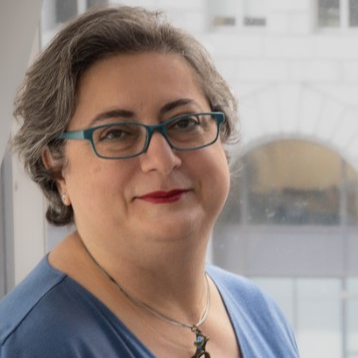

As immigrants, we are often reminded of the challenges that shape our professional journeys. These include immigration policies that limit opportunities, language and idioms that obscure meaning, and cultural norms that make us hesitate to advocate for ourselves. Today, however, I want to focus on something different: the strengths that immigrant professionals bring, the traits that make us exceptional problem-solvers and integrators of ideas. These traits are particularly beneficial to us as Architects, as our role is to transform aspirations into physical manifestations that support human endeavors, which are rooted in history and culture, but are anchored physically within a set space within a community.
We have had to develop skills and habits others rarely need. We are resilient, curious, adaptable, emotionally intelligent, and highly attuned to cues beyond spoken and written language. We are ambitious enough to leave home in pursuit of opportunity. Our hybrid identities, shaped by multiple cultures, languages, and ways of thinking, give us a unique advantage. We navigate different systems with dexterity and confidence. We relate to clients across diverse backgrounds, think beyond conventional boundaries, and approach design with flexibility and creativity that do not default to a single norm.
In an increasingly diverse country, and in global practices like ours, these abilities are not just helpful; they are essential. They allow us to balance expertise with empathy, connect with stakeholders, and earn their trust. We should claim this privilege openly. Our diverse experiences are not liabilities; they are assets that enrich our teams and elevate our work. Hiding them out of fear of being “othered” only diminishes what we can contribute.
Let me offer a personal example on how this diverse experience made it possible for my team to better understand our client and inform our design solutions. I was born in Iran, where my father founded the region’s only allergy practice. He served patients not only from Iran, but also from Afghanistan, the Gulf, Azerbaijan, Tajikistan, and Iraq. With three physicians and a dozen staff, the clinic not only diagnosed patients. It also produced medications. Visiting him there as a child was always a wonder.
Decades later, after choosing architecture and design over medical school, I found myself immersed in healthcare design. On my first project at HOK, a hospital in Singapore for a medical tourism enterprise, our team struggled to understand the clinic flow the client requested. They insisted that physicians should move from room to room while patients stayed put, a common model in U.S. multispecialty clinics. But as I listened, something clicked. The client had a limited number of physicians, many of whom were foreign-trained and multilingual. They needed to prioritize physician efficiency, much like my father’s practice. I sketched the layout from memory and shared it with the team. Suddenly, everything made sense.
At that moment, I realized that although I was educated in the United States, I am fundamentally a hybrid of cultures that shape my worldview. I went to high school in California, studied design at the Rhode Island School of Design, began my career in the Northeast, moved to the South as an emerging professional, and eventually returned to California after marrying my Mexican-born husband. I have worked alongside some of the most diverse colleagues and design partners in the industry. These experiences, along with a lifetime of travel and cultural exchange, are not incidental. They are part of the knowledge base I bring to every project. My cultural memory, architectural heritage, and those of my team members are foundational to how we see form, space, and react to materials. These of course evolve over time through experience, exposure, dialogue, and clients’ needs, but because they are not singular, they lead to curiosity and in turn to solutions that are expansive and inclusive.
Keeping that knowledge to ourselves is a disservice. It is only by sharing it that we improve the questions we ask, expand what we learn, and integrate the best ideas into new designs that serve our clients and communities. As immigrant architects, we must open the dialogue and welcome input for a more inclusive design process. This starts with sharing our own experiences and inviting input from a wider set of stakeholders.. As we lead projects, we can advocate for those who stay quiet, encourage our immigrant colleagues to offer the wisdom of their cultural heritage and take the time to ask questions that may lead to that design spark and make it a great project.
And if that is not a superpower, I am not sure what is.
ABOUT THE AUTHORS


Dear Shiva, This is written so beautifully and expressed so powerfully. Your specific example resonates with many of us who are in diaspora, trying to make a difference with our work. Your analysis of the skills, perspective and tenacity that immigrants bring to architecture is very real and relevant. Grateful for your story and guidance on how we can each bring our diverse voice to our practice.