


From Manta to the Podium: Why Immigrant Voices Must Lead
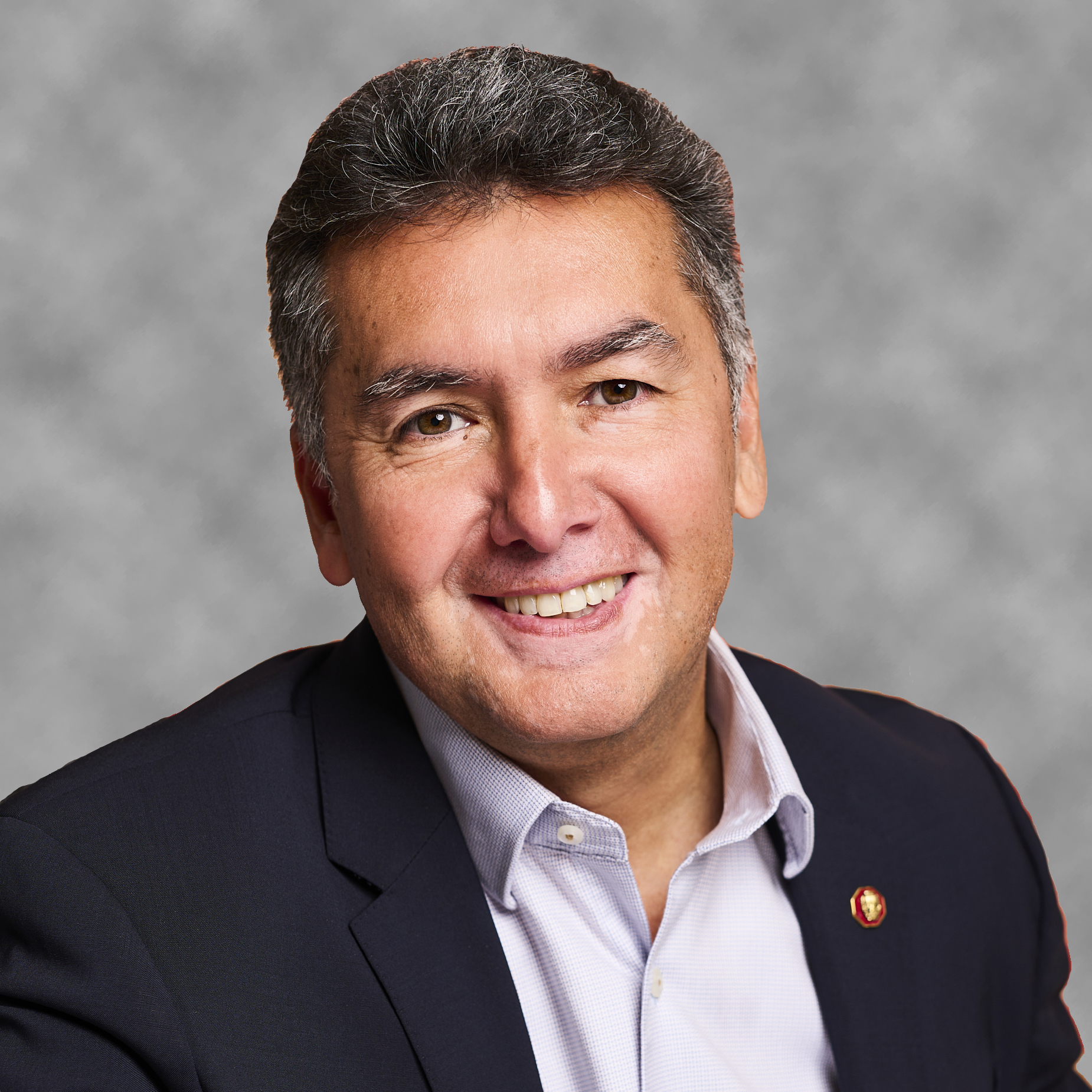

I was born in Manta, Ecuador, a small coastal city on the Pacific, the youngest of nine siblings. Growing up in a large family teaches you things no classroom ever could: how to listen before speaking, how to find common ground, how to hold a room full of competing opinions together long enough to build something, and much more. As I like to say, I would not be here if I were not a good compromiser.
I came to the United States as a first-generation immigrant with a belief that architecture could change lives, not just for the clients who commission buildings, but for the end-users, the families, and the communities that live in and around them. I pursued that belief at the City College of New York's Spitzer School of Architecture. CCNY is not an Ivy League institution, it is a public pathway for working-class students, immigrants, and first-generation college graduates like me. I earned my way. And that experience shaped everything about how I perceive access, opportunity, and who gets to call themselves an architect.
That question, who gets to call themselves an architect, is one I have been answering, in my own way, ever since.
In 2005, I founded Zambrano Architectural Design, a minority-owned, MBE-certified firm based in Freeport, Long Island. Today, we are a nine-person, award-winning multidisciplinary design team registered in six states, doing the kind of work most AIA members will recognize as their own reality: meaningful projects, tight budgets, complex codes, and a deep commitment to the communities we serve.
Our design practice spans a wide range of building types, from healthcare facilities where human dignity is literally built into the walls, including skilled nursing facilities, rehabilitation centers, and behavioral health spaces, to supportive and affordable housing that fosters belonging and community. Adaptive reuse projects breathe new life into historic structures while honoring the fabric of the neighborhoods around them. Beyond individual buildings, our reach extends to placemaking on a larger scale, contributing to the look and feel of the Lima 2019 Pan American Games and collaborating with local community agencies to create vibrant public spaces closer to home. At every scale, the work is resilient, sustainable, and built to make a difference.
But building practice was never enough. Continuously seeing the gap between who architecture serves and who is included, I realize the gap would never close on its own. So, I got involved.
It started at the local chapter level, first as treasurer, learning how the institute works from the ground up, literally from the chapter checkbook and with an unstaffed chapter.
Then came a milestone: as President of AIA Queens, I became the first Latino president in the chapter's history. I co-founded the AIA Brooklyn + Queens Design Awards to spotlight outer borough talent too often overshadowed by the largest component of the AIA.
Stepping into a statewide role as Vice President of Knowledge for AIA New York State, I led a disaster assistance training program that has since equipped over 400 architects for emergency response and released the Disaster Assistance Resource Guide, equipping architects statewide for emergency response and recovery.
As an AIA Strategic Council representative, I co-led a technology study group and created the "No Firm Left Behind" Digital Transformation Roadmap, ensuring emerging tools reach firms of every size, not just the largest ones.
And in 2024, the journey came full circle. As President of AIA New York State, I became the first Latino to lead the second-largest state chapter in the AIA, representing more than 9,600 architects across 13 diverse chapters, from New York City to rural communities. Every step of this path has been about making sure all voices are heard and that everyone has a seat at the table.
These accomplishments have garnered my elevation to the College of Fellows and recognition among my peers, including my alma mater’s CCNY Architecture Alumni and the Latino Alumni Group. Receiving my Fellowship and the Simon Bolivar Achievement Award have been a few of my proudest moments. I did not climb that ladder because someone told me it was my turn. I climbed it because at every level, I saw something that needed to be built, and I built it.
Immigrants are, by nature, systems thinkers and problem solvers. We arrive in new countries, new industries, and new institutions, and we figure out how to make them work for us, and then how to make them work for others like us.
This is exactly why immigrant voices belong in leadership. Not as symbolic gestures. Not as diverse statistics. But because people who have had to build everything from nothing bring a particular and irreplaceable perspective to the table.
Growing up navigating systems that were not designed with you in mind, you develop a skill that no leadership program can fully teach: you learn to see the gap between how things are and how they could be, and you do not accept the gap as permanent. We arrive in unfamiliar places, figure out how they work, and then open the door for others.
In a profession as consequential as architecture, one that shapes where people live, heal, learn, worship, and gather, that perspective is not optional. It is essential.
The built environment reflects the values of the people who design it. For too long, those people have come from a narrow slice of society. The communities that most need thoughtful, equitable, and resilient design are often the ones whose voices are least represented in the rooms where design decisions get made. When architects who come from these communities lead, truly lead, not just participate, the profession begins to close that gap.
I think about the students I've worked with through the Queens Foundation for Architecture, the 501(c)(3) I founded to provide scholarships and K-12 programs to underserved communities across New York. The kid in a Queens classroom who has never met an architect, never seen someone who looks like them walk across a stage to accept a design award, and what it means for that child to see that this is possible.
Representation in leadership is not charity. It is a signal. It tells the next generation that the door is open, and it keeps it open.
The AIA is at a pivotal moment. The profession is grappling with questions of equity and access, with the existential urgency of climate change, and with the technological transformation reshaping practice at every scale. These are not abstract challenges. They are lived realities, and the architects best positioned to address them are often those who have spent their entire careers navigating complexity, building across boundaries, and designing for communities that have too often been designed around but never designed for.
I believe the future of this profession depends on who is at the table when its direction is set. And I believe that immigrants, with our hard-won perspective, our deep roots in community, and our unshakable belief that architecture can change lives, have not just a place at that table, but a responsibility to lead from it.
I came to this country with a belief. I built a practice, a foundation, a community, and a path through every level of this institute on the strength of that belief. And I am still seeking the opportunity to bring it to the highest level of our profession.
Architecture is for everyone. That includes us. That includes me.
ABOUT THE AUTHOR


Comments